Escape routes
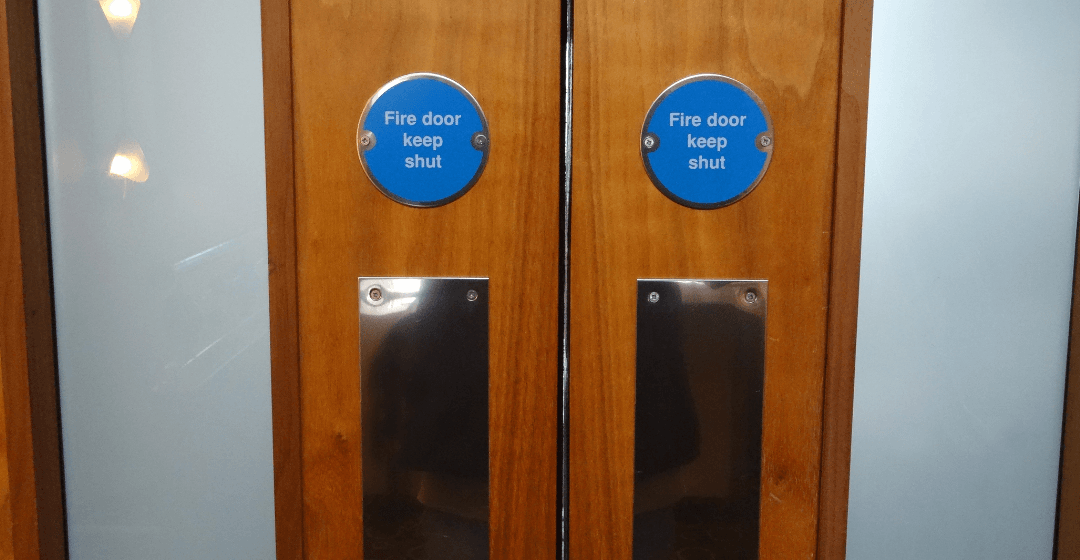
Regular fire drills and a clearly signposted fire assembly point are both necessary, but ensuring your staff can reach it safely is just as important. Fire escape routes should be clearly marked, and corridors and through routes should be kept free of anything that may pose a danger to staff. This doesn't just mean clutter (boxes, odd chairs, bins), but things like loose carpets, dangling wires, and low-hanging objects can also cause problems.
Also make sure that access points along the fire escape route are easily useable — doors might get stuck or be blocked, and fire escapes located through locked doors could be a serious danger to staff safety. Access control systems need to have a mechanism in place for emergency door release to ensure safe evacuation of everyone from the building. Tensor's access control systems include a door release control override from the inside, in addition to break glass points for unlocking access-controlled doors in an emergency.
Test wires and appliances
The London Fire Brigade lists the top cause (32%) of fires in the workplace as electrical distribution.
Regular inspection and testing of electrical equipment (Portable Alliance Testing — PAT) is a vital part of any business, as poorly maintained or aging equipment can be at increased risk of fire. In addition, overloading sockets or over-using extension cables can be a risk.
However, the wiring throughout the building is also a potential fire risk, with worn or frayed cables posing a risk that may not be as obvious as something like an old computer or kettle. Regular checks and testing are necessary to ensure safe upkeep, but making sure the wiring throughout the building is properly installed is a good way of limiting the potential risk of fire.
Tensor customers will always receive a safe and professional installation: we are SafeContractor approved and our installation engineers are covered by the Client Contractor National Safety Group (CCNSG) Safety Passport Scheme organised by the Engineering Construction Industry Training Board (ECITB). Once your system is installed, we also provide an ongoing service, so if you ever do need assistance with any installations we are a helpdesk call away.
Keep track of visitors as well as employees
In the event of a fire, employees should know what to do and where to go, but making sure you know where everyone is can provide often life-saving information in an emergency. Visitors could be forgotten or get lost in the evacuation if they don't know the company fire procedures or assembly points, so knowing who and where they are can be even more necessary.
Using a sign-in book is one simple way to be aware of visitors on site, but a more accurate way to track both employees and non-employees is with access control and visitor monitoring — such as Tensor's system.
Staff using a smartcard, fob or biometrics to use both internal and external doors, which is logged on a central system, means you know where your staff are at all times — down to a room-by-room level if desired. Visitors who sign in when they arrive using a visitor management system, including via an unmanned check-in console, can be issued their own smartcard or badge which limits their movements and is active only for the duration of their visit. They will then also be included on the access logs and be tracked in the event of an emergency.